Countries
Congo, Republic of the
In the presidential social project, Together, Let’s Continue the March, one of the specific objectives is to modernise the living spaces of the population. Towards this end, real estate development has been chosen as the sixth pillar of the National Development Plan NDP 2022-2026 and one of the essential levers for the diversification of the country’s economy. On 28 November 2023, the President announced before the parliament meeting in congress an emergency presidential programme of 1 200 housing units.1
The mobilisation of financial resources both at the national level and through international cooperation is essential. It is in this context that the Shelter Afrique Development Bank has been identified as one of the key partners. In May 2024, exchanges took place in Brazzaville between Shelter Afrique and the Ministry of Construction, Urban Planning and Housing (MCUH). These discussions focused on the structuring of real estate financing strategies, with the aim of signing a memorandum for the financing of a 3 000 unit affordable housing project.2
In July 2024 a new era of real estate development was announced with the decisive commitment of the African Solidarity Fund (ASF). The latter is recognised for its successes in promoting sustainable development through its member states. Led by its Director General, the FSA delegation met with the MCUH and discussions focused on a strategic partnership to support Pillar Six of the NDP, with a particular focus on the state’s emergency programme for the construction of 1 200 housing units.3

The annual population growth rate was estimated at 2.3% in 2022.
More than half the opulation lives in Brazzaville and Pointe-Noire, the two major urban centres.
Housing whether to buy or to rent is out of reach of the majority, and access to mortgage and other finance is limited.
Housing Finance in Congo
More information
Find out more information on Republic of the Congo’s housing finance sector, including key stakeholders, important policies and housing affordability:
Located in Central Africa, the Republic of Congo covers a total area of about 342 000 km2.4 Brazzaville and Pointe-Noire, the two major Congolese urban centres,5 share more than half of the country’s 6.1 million people.6 The annual population growth rate was estimated at 2.3% in 2022. With 56% under 20 years old, its population is mostly young. The territory is one of the least densely populated in Africa with 14.8 inhabitants per km2.7 Urban dwellers represent 60% of the Congolese population, making the country one of the most urbanised in the sub-region.8 However, this urbanisation is characterised by the development of informal housing and many precarious, under-equipped neighbourhoods established in areas at risk.9
The country is rich in natural resources, but its economy is highly dependent on oil. Indeed, the oil sector accounts for about half of the country’s gross domestic product (GDP) and 80% of its exports, making it the third largest producer in Sub-Saharan Africa.10 The country also has abundant mineral resources, most of which are still untapped. Economic activity increased by 1.9% in 2023. The ongoing reform of fuel subsidies is helping to maintain budget surpluses, but has also contributed to a temporary increase in inflation, which reached 4.3% in 2023. GDP is expected to grow at a rate of 3.5% in 2024 and 3.4% on average in 2025/26. The debt-to-GDP ratio is projected to decrease to 81% in 2026.11
Politically, Congo has been governed by President Denis Sassou-Nguesso since 1997 and who was re-elected in March 2021. A National Development Plan 2022-2026 (NDP) was promulgated in 2022. Despite these efforts by the government, in 2022, poverty affected 46.6% of the population. The country’s Human Development Index (HDI) stood at 0.42 in 2023, below the average for lower-middle-income countries (0.48). In 2022, the unemployment rate reached 21.8% of the working-age population,12 particularly affecting young people, 42% of whom do not have access to employment.13 These conditions, combined with the rise in year-on-year inflation to 3.5% for the year 2023, and even more acute food price inflation (4.6% year-on-year), have made the poor even more economically and socially vulnerable.
In urban areas, one in two households does not have access to decent housing. Spontaneous peripheral neighbourhoods often do not have access to drinking water, sanitation, electricity and hygiene services. Nearly 66% of the urban population has access to electricity, compared to 15% in rural areas. Nationally, 74% of the population has access to a source of drinking water, including only 46% of rural households.14
Regarding housing, a National Land Policy was promulgated in 2015 following the land reform initiated in 2009. Nonetheless, more than 90% of the existing housing stock (out of a total of 275 000 homes) is self-built, compared to barely 10% of formal housing produced by the state. The current needs are estimated at 15 000 housing units per year, but the state, the sole landlord and provider of social housing, cannot meet the demand.15
In 2022, Congo’s financial network included 10 banks16 and 47 microfinance institutions (MFIs).17 Société Générale, Crédit du Congo, Congolaise de Banque (LCB) and Ecobank offer housing loans. Banks mainly rely on deposits to finance their mortgage portfolios. They only offer short- and medium-term credit, given their lack of access to long-term resources.18 As a result, long-term loans in Congo experienced a drastic slowdown in 2021/22; outstanding long-term loans (including mortgage loans) stood at CFA31.2 billion (US$51.12 million) in 2020, jumped to CFA84.4 billion (US$138.29 million) in 2021, before stagnating at CFA84.8 billion (US$138.95 million) in 2022.19 Brazzaville and Pointe Noire concentrate 71% of MFIs. Despite their strong presence, few MFIs offer specific products for housing. As a result, self-construction of housing is becoming the preferred alternative for most of the city dwellers looking for housing.
To facilitate access to property for all Congolese, and more particularly for the less well-off, the Banque Congolaise de l’Habitat (BCH) was created in 2007. The BCH is the central player in the housing sector and operates mainly in Brazzaville and Pointe Noire. It is dedicated to the financing of housing and real estate development operations. Its banking offer for housing financing consists of several products including the Home Savings Plan, the Home Savings Credit and loans for self-construction, renovation or extension.
In 2008, the state created the National Housing Fund (FNH) to finance the activities of the BCH. However, problems of access to finance persist. These bottlenecks are mainly due to the BCH’s undercapitalisation, significant losses caused by the deterioration of its portfolio and the low availability of resources for financing housing financing needs.20 The BCH offers loans that are advantageous compared to commercial banks, since it offers these loans at an interest rate of 6.5%, while commercial banks raise their rates to 14%. However, the contraction of loan repayments to only five years inflates monthly payments and makes BCH loans difficult to access for low-income households.21
Similarly, the Real Estate Development Company (SOPRIM), created in 2012 with the aim of improving social housing through sale or rent-purchase, has not produced the expected results. However, a home savings program had been set up to facilitate access to property ownership for all social strata.22 Finally, the National Housing Fund (FNH) set up in 2014, which was to be financed by the levy of parafiscal taxes on the salaries of private sector employees, is not yet operational, due to the lack of an implementing decree.23 From all the above, it appears that access to housing finance remains a crucial concern of the sector which is far from being satisfied.
The value chain of Congo’s real estate supply is hampered by many obstacles that make the price of housing more expensive. The acquisition of plots is not only expensive, but the regularisation procedure is also very long and expensive. With respect to access to mortgage loans, the conditions and eligibility criteria seem to exclude a significant proportion of employees in the informal sector, both public and private with modest incomes.
However, since the very concept of housing affordability is intimately linked to household purchasing power, even civil servants and government agents as well as informal entrepreneurs find it difficult to access mortgages because of their low purchasing power. The Gross National Income per capita amounted to CFA1.1 million (US$1 802) in 2020.24 In Congo, the Guaranteed Minimum Interprofessional Wage (SMIG) amounted to CFA90 000 (US$147) in 2023.25
Renting formal apartments in Brazzaville is unaffordable. Indeed, households must pay between CFA100 000 and CFA250 000 (US$164 and US$410) per month to rent a two- or three-bedroom apartment among the cheapest available. The cost of renting can go up to CFA1 700 000 (US$2 785) per month for high-end accommodation with six bedrooms. The terms of access to rental remain restrictive, since landlords and agencies ask for an advance (deposit and agency fees) representing between two and four months’ rent.26
The typical homes built in the urban centers of Congo are made of solid materials that are durable over time. However, those built in rural areas are made of local materials without basic equipment. Between 2020 and 2022, the formal housing stock increased with the production by SOPRIM of 588 social housing units.27 In addition, 100 housing units have been built by the Government, not to mention a few dozen others built in the so-called “Mpila Housing” housing estate.28 Of course, this minimal supply does not solve the problems of decent and affordable housing in Congo. In addition, there is a certain lack of sales of these homes due to a lack of solvent tenants, as only people with higher incomes can afford these formal homes, since the cheapest unit is sold at CFA22 million (US$36 049).29
The housing supply provided by the state, although subsidised, remains expensive for the poor. Indeed, the construction costs are between CFA280 000 and CFA350 000 (between US$459 and US$574) per m2.30 Thus, the smallest dwelling built by SOPRIM, with a surface area of 80m2,31 costs between CFA22.4 million and CFA28 million (between US$36 704 and US$45 880). Given the purchasing power of average households in Congo, these homes remain largely inaccessible, as more than one in two households do not have access to decent housing.32
The Republic of Congo has very few private developers. Partnerships with foreign real estate developers have remained unsuccessful due to their low financial and technical capacity to undertake large housing projects. Despite the more than US$600 million (CFA366.2 billion) provided by China, only high-end housing has been built and more than 1 000 of them remain empty.33
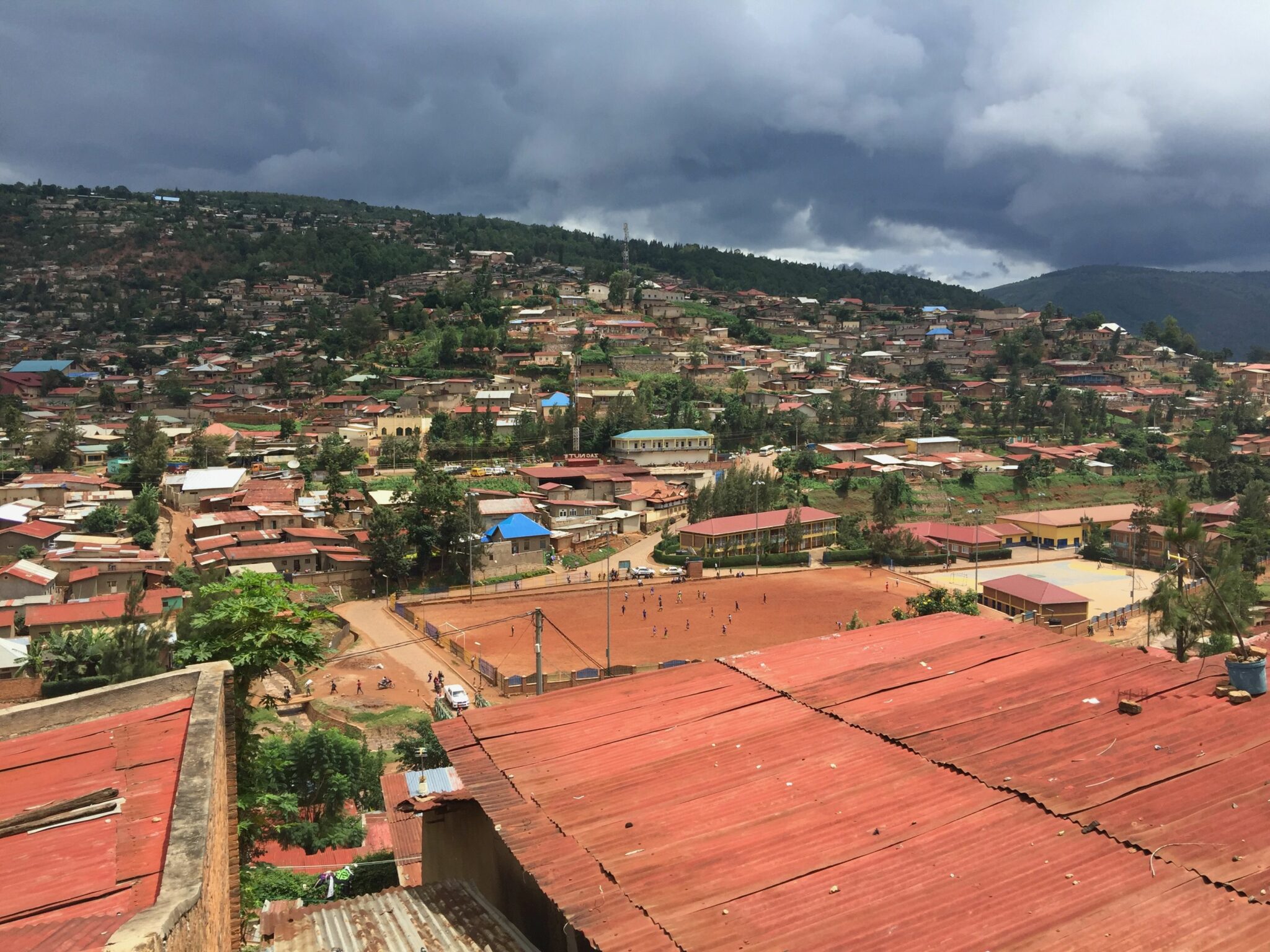
Informal constructions in the outlying districts of urban centers are made with the method of self-construction by individuals who rent them out. This type of accommodation includes a living room, two bedrooms and a kitchen, totalling nearly 50m2 of buildings. It is rented between CFA80 000 and CFA120 000 (US$131 to US$197) per month, depending on the neighbourhood and the level of local service.34 Typically, a single courtyard is shared by two or three households using the latrines and showers as well as the communal taps and electrical connections.
Although in recent years the Congolese Government has undertaken considerable efforts to reform legislation in favour of equal rights of access to land for men and women, it must be noted that in practice, the weight of socio-cultural constraints imposes on women a tendency to conceal property titles to circumvent this constraint. In addition, all government initiatives to provide affordable housing concern only the main urban centers, particularly Brazzaville and Pointe-Noire, where there are more tenants than owners. With a target of 10 000 housing units per year against the expressed needs of 15 000 units, the 2022-2026 NDP aims to reduce the current deficit significantly by 2026, especially in urban centres.
Access to a residential plot in the city is mostly by purchase or inheritance. Regular allocations of plots, even small ones, are rather rare and expensive, both in terms of price and time to complete lengthy administrative formalities. The Single Window for Land (GUF) has not reduced the number of land disputes generated by anarchy in the sector. In addition, the cost of construction being dependent on the prices of conventional materials,the continuous increase in the price of cement has pushed the Ministry of Trade, Supply and Consumer Affairs to regulate the price and find an agreement with Congolese cement producers. Thus, since 7 August 2023,the price of a ton of cement has been set at CFA67 000 (US$110), or about CFA3 350 (US$5.48) for a 50kg bag of cement.35 This sharp rise in the price of cement had blocked some of the informal construction sites opened before this period. Thus, without substantial government subsidies, access to decent housing will remain an ongoing challenge for most low income Congolese.
The real estate market in Congo is characterised by strong demand from local and international buyers. Created in 2011, the Land Agency for Land Development (AFAT) is the public body responsible for the servicing and development of land. Its mission is to compensate for the lack of infrastructure on land ready to accommodate construction projects of all types. AFAT has a reserve of about 700 ha of titled land throughout the territory. It sells these serviced plots to individuals or real estate developers. AFAT has carried out a project to develop 3 ha of land in Brazzaville, near the airport. Sale prices are set at CFA30 000 (US$49) per m2 and 500m2 plots were sold for CFA15 million (US$24 579.08).36
Real estate agencies set prices according to the number of rooms, the district, the ease of access to the plot, the condition of the building, the presence of a generator, security, the presence of a school, etc. In addition, the rental market is flooded with furnished apartments for temporary rental, which are much more profitable than residential rentals. Thus, housing appears to be a financial investment destined to be lucrative, rather than an accessible facility capable of absorbing the housing deficit.37
The average sale price of a plot of land in a residential area is estimated at between CFA160 000 and CFA200 000 (between US$262 and US$328) per m2. While plots or properties in the city centre are of great value, there is also good investment potential in the outlying areas that are experiencing rapid
development.38
Although many reforms have been carried out in recent years, disputes related to land issues remain a real risk. The cumbersome and complex procedures and the risks associated with land and its registration limit investments in the real estate sector. For example, Congo is ranked 134th out of 190 economies in terms of the efficiency of procedures for obtaining a building permit, which takes 164 days and 13 procedures. The situation is even more complex for land registration, for which the Republic of Congo is ranked 174th, despite the reduced number of procedures (five) and days (54) required, which highlights dysfunctions in the administrations that provide these services.39
The 2022 Single Land Offices (GUF), in each capital of the Congolese departments, is responsible for the rapid and secure processing of files in order to reduce the time it takes to issue titles. However, this does not address the Congolese people’s lack of confidence in land titles, given the many persistent land disputes.40 The lack of land tenure security discourages landowners from paying the equivalent of 13.6% of the value of the land to register it, without collateral.41 As real estate markets are subject to often uncontrollable speculation, we are witnessing a grabbing of strategic urban and rural land by the elite in complicity with canvassers and other unscrupulous public officials; this leads to more exclusion of poor households.42
The right to acquire land in Congo is based mainly on Article 23 of the 2015 Constitution, as well as Law No. 21-2018 of 13 June 2018 laying down the rules for the occupation and acquisition of land and land, supplemented by six regulatory texts.43 All these legal provisions in place promise a secure legislative environment for all in terms of land and real estate. In short, any natural or legal person governed by private law may acquire property or a plot of land in the Congo, including women, who enjoy the same rights as men, although this remains rare in practice.
The Ministry of Construction, Urban Planning and Housing is responsible for the implementation of the Government’s guidelines on housing. It intervenes at both the supply and demand sides. To provide solutions to the housing problem, a tripartite system was implemented. This system includes AFAT, which services and develops land intended for construction, SOPRIM, which acts as a public real estate developer and builds housing, and BCH, which finances both construction operations and buyers’ mortgage loans. However, the interventions of these institutions lack coordination. The Ministry of Housing is supported in its actions by the Ministry of Spatial Planning and by the General Delegation for MajorWorks, which is an agency for monitoring and executing major works, including public housing programmes.44
The National Development Plan PND 2022-2026 includes pillar six, which is related to real estate with a view to ensuring decent housing for all Congolese.45 There are plans to build 150 000 social housing units by the end of the programme. The initiative to explore other methods of prefabricated housing through a public-private partnership with the company FORSPAK is perfectly in line with this new perspective. The 1992 National Housing Strategy is currently being revised. At the local level, new master plans for Brazzaville and Pointe Noire have recently been designed to replace the previous local urban plans dating from the 1980s and which have become obsolete.
In 2020, the annual housing deficit in Congo was estimated at 15 000 units, with a focus on the urban area where demand is very high. The challenge at this level is to ensure territorial equity in terms of housing and to make the hinterland attractive through the development of decent housing not only for executives but also and above all for young people who want to settle there and develop an economic activity.
Due to the high prevalence of self-construction on Congolese territory, the state wishes to cooperate with the private sector to achieve its objectives in terms of sustainable and accessible housing at affordable costs for all social strata. To this end, the promulgation of the decree implementing the FNH would be a real trigger for the development of social housing in Congo. This decree adopted by the Council of Ministers will specify the modalities for the provision and use of
resources for the benefit of the said Fund. As the law provides for the FNH as a simple special treasury account or as a fund without legal personality, it is envisaged that the management and use of its resources will be entrusted to public or private credit bodies, operating mainly or not in the field of financing real estate activities and socio-economic housing.46
To give substance to the desire to diversify the economy through sectors other than oil, the presidential emergency programme 1 200 housing units was initiated. This pilot phase would be followed by the construction of 20 000 housing units in the medium term (within 10 years).47 Thus, the MCUH is seeking the support of a technical and financial partner with recognised experience to assist it in the preparation and implementation of the National Partnership Strategy for Housing and Sustainable Development (SNPLDU).
The informal sector, which accounts for the majority of the working population, is a real opportunity that would result in proposals for appropriate financing mechanisms. So far, very few homes are built sustainably, so the development of the sustainable construction sector to reduce the energy consumption of housing could be explored. Public private partnerships are still underused despite the fact that they are an effective means of spreading the risks associated with the costs of large programmes between the government and private sector actors.
Specific data on housing and its financing, where they exist, is partial, incomplete and unreliable. Their collection requires persistence using roundabout means such as personal relationships. Above all, banking data on mortgage loans is very often scattered, especially since there are many financial institutions that rarely make their data available on time. They can be made public, for example, when the government needs them as part of its development programmes.
Nevertheless, in addition to the World Bank and the Central Bank, the main Congolese institutions likely to have data on land tenure and the financing of real estate in general and affordable social housing in particular are: the Ministry of Territorial Planning, the (MCUH) and the Ministry of Public Domain, the Land Agency for Land Development, the National Institute of Statistics, the Institute of Economic and Social Research and the BH.
Ministry of Construction, Urban Planning and Housing:
www.construction.gouv.cg
Ministry of Planning, Territorial Equipment, Infrastructure and Road Maintenance:
www.grands-travaux.gouv.cg
SOPRIM:
www.soprim.cg
Ministry of the Economy and Finance:
https://www.finances.gouv.cg/
- Ministry of Construction, Urban Planning and Housing (MCHU). (2023). https://web.facebook.com/Construction.gouv.cg (Accessed 18 August 2024)
- Ibid.
- African Solidarity Fund (ASF). (2024).Activities of the FSA mission in Congo.
- Universalis. (2023). Congo (Republic of). https://www.universalis.fr/atlas/afrique/republique-du-congo/
(Accessed 18 October 2023). - World Bank. (2022). Republic of the Congo – Overview.
- World Bank. Congo, Republic of – Data.
- World Bank. (2024).The Republic of Congo in brief. https://www.banquemondiale.org/fr/country/congo
(Accessed 19 July 2024). - World Bank. (2020). Housing Finance in the Republic of Congo –Towards Affordable Housing for All. April 2020. Pg. 11.
- Bourguignon-Roger, C., Rossignol,A. (2018). Review of the land sector in the Republic of Congo.World Bank, Washington, D.C.
- World Bank. (2024). Republic of the Congo – Overview.
- Ibid.
- See Footnote 6.
- World Bank. (2024). Republic of the Congo – Overview.
- See Footnote 5.
- See Footnote 8. Pg.11.
- BEAC. (2023).Annual Report 2022. https://www.beac.int/wp-content/uploads/2023/10/Rapport-annuelBEAC-2022.pdf (Accessed 19 October 2023). Pg. 50.
- Ibid. Pg. XVI.
- See Footnote 8. Pg. 8.
- See footnote 17. Pg. 33.
- African Development Bank. (2023). Institutional Support Project for BCH Capacity Building and Urban and Housing Sector Reform in the Republic of Congo. March 2023. https://www.afdb.org/fr/documents/congoprojet-dappui-institutionnel-pour-le-renforcement-des-capacites-de-la-bch-et-la-reforme-du-secteur-delurbanisme-et-de-lhabitat-en-republique-du-congo (Accessed 19 October 2023). Pg. 2.
- See Footnote 8. Pg. 15.
- SOPRIM. (2017). Structural organization project of SOPRIM. December 2017.
https://www.construction.gouv.cg/documents/projet1.pdf (Accessed 19 October 2023). Pg. 3. - See Footnote 8. Pg. 8.
- See Footnote 4.
- Martial, L. (2023). Congo-Brazzaville: the millions lost from the informal economy. 24 February 2023. RFI
- Coin Afrique. (2023).Apartments for rent Congo Brazzaville. https://cg.coinafrique.com/search?sort_by=last&category=51&re_offer_type=rent (Accessed 19 October 2023).
- CAHF. (2022). 2022Yearbook on Housing Finance. Republic of Congo. Pg. 250.
- Ibid.
- See footnote 26.
- See Footnote 8. Pg. 27.
- See Footnote 8. Pg. 24.
- See Footnote 8. Pg. 9.
- See Footnote 8. Pg. 50.
- Interview with Barah hardware store, which has a branch in Pointe-Noire, Congo, on 10 September 2023.
- See footnote 30.
- See Footnote 8. Pg. 18.
- See footnote 29.
- Nesrine, R. (2023). Residential real estate in the Republic of Congo. June 2023. Proprio Immo.
https://proprio.immo/immobilier-congo/ (Accessed 15 September 2023). - World Bank. (2020). Economy Profile – Congo, Rep. Doing Business 2020. Pg. 4.
- Koubemba, JJ. (2022). Land management: the land title now available within fifty-five days. 28 March 2022. Adiac-Congo.
- See footnote
- Pg. 4. 42 Vox. (2016). Social housing for whom?. 11 January 2016. http://www.vox.cg/des-logements-sociaux-pour-qui/
(Accessed 18 September 2023). - Republic of Congo. (2018). Official Journal of the Republic of Congo. 60th Year – No. 25. 21 June 2018.
https://www.sgg.cg/JO/2018/congo-jo-2018-25.pdf (Accessed 21 September 2024). Pg. 772. - Ministry of Construction, Urban Planning and Housing (MCHU). (2023). Urban Planning and Construction Code. Pg. 87.
- Government of the Congo. (2022). National Development Plan PND 2022-2026. Pg. 61.
- MCUH. (2024). Report on the presentation of the decree on the FNH.
- MCUH. (2024). Emergency Presidential Programme 1,200 housing units.
- Echoes of Congo Brazaville. (2024).Towards the realization of the presidential emergency project of 1200 affordable housing units in Congo-Brazzaville. https://tinyurl.com/mpfycsj7 (Accessed 21 July 2024).
- Ministry of Construction, Urban Planning and Housing (MCHU). (2024).
https://web.facebook.com/Construction.gouv.cg (Accessed 29 July 2024). - MCUH. (2024). Project to build 128 social housing units in Nkayi. Pgs. 48-50.
image submissions
CAHF welcomes image submissions that are relevant to affordable housing in Africa. Send your photos to [email protected] for possible inclusion on our website.
media gallery
View image gallery of photos for other countries