


Countries
Sierra Leone
Sierra Leone’s residential property market is slowly improving, despite fragmented growth in the sector and uncoordinated policies and actions across various government entities. Even though the actions of each institution generally improve the housing sector’s ecosystem, the lack of coherency limits the positive impact on the industry as a whole. In 2024, there have been new promising initiatives in the areas of land administration, green development, and funding to address the energy crisis.
The Ministry of Lands, Housing and Country Planning has digitised the application process for state land lease and freehold, building permits, and land regularisation.1 This advancement can enhance the speed, transparency, and reduce the cost of transactions.
In July 2024,the Freetown City Council (FCC) launched an ambitious Freetown Development Agenda 2024-2028 with the aim of transforming Freetown into a thriving, resilient, and inclusive city. This agenda focuses on creating green jobs and investing in reforestation, green energy, urban adaptation, solid waste management, city regeneration, informal settlements upgrades, and green mobility. 2 With respect to green mobility, the C40 Cities Finance Facility3 is partnering with the FCC to introduce the first cable car, which will serve as a safe, affordable, and efficient public transport system. Designed to improve transport in steep hillside communities, the cable car will have four stations covering around 3.6km, and the capacity to serve 6 000 people per hour.4 This integrated transportation solution has the potential to transform the city, reduce carbon emissions and improve air quality in Freetown.
In addition, the government is actively addressing the country’s energy crisis on multiple fronts. The African Development Bank (AfDB) is currently evaluating the financial feasibility of Phase 2 of Bumbuna, a large hydropower project on the Upper Seli Reiver in Northeast Sierre Leone.5 A US$480 million grant by the Millennium Challenge Corporation from the US government was approved in July 2024. The funds will be directed to financing reliable and sustainable transmission and distribution infrastructure in order to address the energy challenges in the country.6
Partly as a result of these developments in the sector, investor confidence in the country is slowly being restored. In December 2023, the TAF Salone Micro-City was officially launched by the Vice President as a joint venture between the Government of Sierra Leone and TAF Africa Global. The project will deliver 5 000 affordable homes in the John Obey community.7 In June 2024, KAF Properties commenced construction of 42 smart homes at John Obey.8 Furthermore, Jobomax Homes, a well-known affordable housing developer in West Africa, recruited a media partner in March 2024 to support the company’s growth in Sierra Leone, as well as in Ghana and Guinea.9

The urbanisation rate is 3.2%. Just over half of the urban population live in slums.
The high inflation rate is attributed to Russia’s invasion of Ukraine which led to significant increases in commodity prices.
Most housing development is financed by savings, resulting in a high prevalence of incremental construction.
Housing Finance in Sierra Leone
More information
Find out more information on Sierra Leone’s housing finance sector, including key stakeholders, important policies and housing affordability:
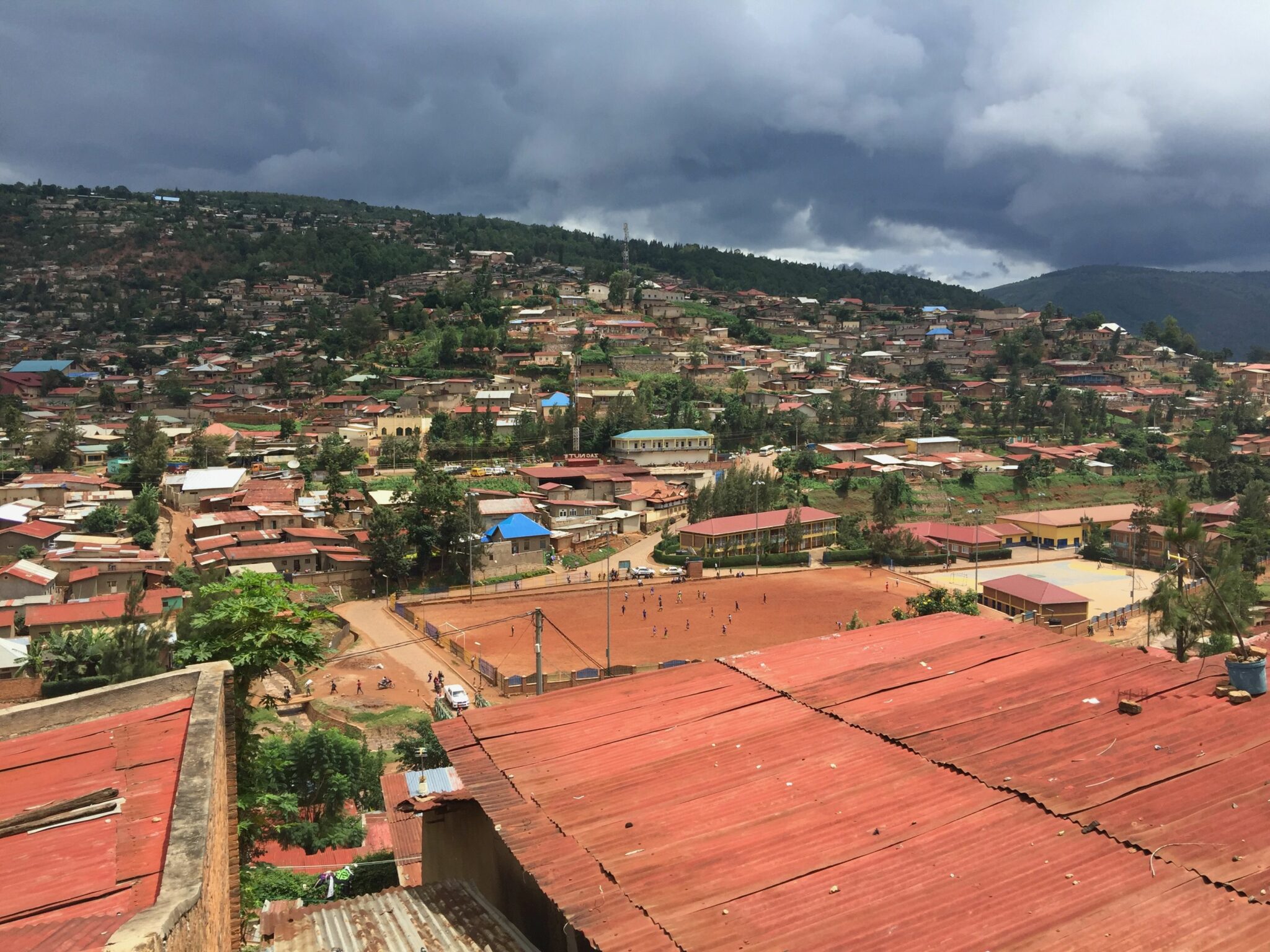
Sierra Leone has an estimated population of 8 791 092.10 With an urbanisation rate of 3.2% in 2023, the urban population represents about 44% (3 894 454) of the total population, many of whom live in slums. The country covers an area of 72 783km2, with a population density of 117 people per km2 (2021), and population growth rate of 2.13%. According to the 2021 mid-term census, the populations of the Southern and Eastern regions have increased by 27% and 18.3% respectively, while the urban population fell in the Western region by 15.3%. The Western region, where the capital city Freetown is located, is the most densely populated, with a density of 1 826.6 persons per km2 and an average household size of 4.25.11 Freetown is the main economic centre and has rapidly expanded in the last 20 years. Much of this growth is concentrated in informal settlements that are prone to flooding and disease, due to unstructured growth, a dense population, and the city’s topography.12
Sierra Leone experienced a slowdown in economic growth, from 3.5% in 2022 to 2.6% in 2023. This was due to Russia’s invasion of Ukraine, which led to significant increases in commodity prices. The mining, agriculture, manufacturing, construction, and tourism sectors are projected to lead the country’s economic growth from 4.7% in 2024 to 5.2% in 2025.13 Inflation stood at 35.84% May 2024, (down by 2.22 percentage points from April 2024)14 and is expected to decline to 20.2% in 2025, as external shocks subside. 15 Agriculture is the new flagship programme of the government and remained the primary contributor (64.4%) to GDP, while the construction and real estate sectors grew in 2023 by 6.4% (from 5.1% in 2022) and 4.9% (from 4.2% in 2022) respectively.16
Interest rates remain very high. Due to limited liquidity in the interbank market, the weighted average interest rate rose from 21.9% in September 2023 to 24.8% in December 2023. Meanwhile, the average loan rate of commercial banks fell to 20.2% in December 2023 (from 20.5% in September).17 This stability has enhanced the foreign trade balance and decreased speculation in the foreign exchange market.
According to World Bank estimates, in 2023 an estimated 25.3% of Sierra Leoneans earn below the international poverty rate of SLE48.43 (US$2.15) per day. This percentage is expected to decline to 23.7% in 2025 and further to 22.7% in 2026. 18 However the Multidimensional Poverty Index from the UNDP shows that close to six out of every ten Sierra Leoneans (58%) are multidimensionally poor, with a considerably higher rate in the rural areas.19 The country is still ranked among the poorest in the world (184 of 193) with an average annual HDI growth rate of only 0.80% (2010-2022).20
There are positive developments in 2024, in terms of economic growth plans and political development. The Transform Freetown – Transforming Lives 2024-2028 Development Agenda was introduced in July 2024 by Freetown Mayor Yvonne Aki Sawyerr. By 2028,the plan aims to promote economic growth and create 120 000 decent employment opportunities.21 Following the June 2023 elections, there were a number of political developments, including the establishment of the cross-party committee on the electoral system (Tripartite Committee) which brought together the ruling party and the main opposition.22 Submitted to the President in July 2024, the Committee’s report includes positive recommendations regarding efforts to enhance the country’s democratic profile, restore partners and investor confidence, and strengthen the country’s economic and political stability
Sierra Leone’s financial inclusion rate is 29%, which is approximately half the average for Sub-Saharan Africa (55%).23 This percentage is lower for women (25%) primarily due to inadequate financial and digital literacy levels and a lack of financial products tailored to women’s needs.
The World Bank’s Financial Inclusion Project in Sierra Leone, expected to run from 2019-2025, totals SLE270 285 600 (US$12 million). Project implementation is ongoing with three components including: expanding access points; facilitating a safe and efficient payment system; and creating enabling environments for increased adoption and usage of transaction accounts via technical assistance and investment financing.24 Gender, climate change, and disability inclusion are among the project’s top priorities for providing financing to disabled and women-led micro, small, and medium-sized enterprises.25 In May 2023, the Bank of Sierra Leone (BSL) launched the National Payment Switch, and GENESIS is working on behalf of the Ministry of Finance to develop rural payment connectivity solutions which are expected to be completed in 2026.26
Financial access points are rapidly expanding in the country. As of June 2023, Sierra Leone had three Mobile Money Operators, with a combined agent network of over 35 000.There are 14 commercial banks with 140 branches, 128 Automatic Teller Machines (ATMs), and 280 Point of Sales (POS) terminals. The country also has 41 credit-taking and five deposit-taking microfinance institutions (with over 200 branches), 66 registered forex bureaus, 59 financial services associations (FSAs), and 18 community banks, including Apex Bank.27
Remittances play a significant role in financing the housing sector and have a notable impact on housing supply. A substantial decrease in remittance value from SLE3 207 389 120 (US$142.4 million) in Q4 2022 to SLE2 518 160 840 (US$111.8 million) in Q4 202328, could negatively impact overall market supply. The banking sector is relatively stable due to strong regulatory oversight. In Q4 2023, asset quality improved, non-performing loans decreased to 8.8%, and banks’ profitability increased with higher return on assets and return on equity.
First Bank (FB) Sierra Leone and Commerce and Mortgage Bank (CMB) offer a range of mortgage loans, including home purchase, home completion, and home improvement, with interest rates ranging from 21% to 24% and payment terms extending up to 20 years. For FB, borrowers are required to demonstrate verifiable and stable income, and a letter of irrevocable domiciliation of salary/income, among other prerequisites. Both individuals and groups are eligible to apply for the loan, with the possibility of refinancing for residential property, and a mandatory 30% down payment.29 CMB provides loans valued up to SLE2 702 856 (US$120 000) with a 20% deposit for home purchase loans and payment terms of up to 15 years for home completion loans.30 Owing to elevated rates for defaults and non performing loans (NPL), lending institutions have heightened loan criteria, resulting in escalated interest rates and underwriting costs.
Other financial institutions, such as United Bank for Africa (UBA) and Zenith Bank, offer non-mortgage housing loans to high income individuals. The interest rates for these loans range from 24% to 27%, with a payment term of two years and a commitment of 30% to 35% of monthly salary.31 Women have equal access to loans, and gender-based discrimination is illegal.32
The affordable housing backlog in Freetown is growing at an alarming pace, as evidenced by the expanding slum settlements in the city. Key factors driving unaffordability are: high unemployment and underemployment rates33;rising prices of basic foods and utilities; slower economic growth34; and growing household sizes.35 Most housing development is financed from individual savings, resulting in a high prevalence of incremental construction (79.5%).36 Formal affordable housing is not attractive to many households in Sierra Leone due to the dominance of the informal economy and high non housing-related expenditure.37 Because the informal economy represents approximately 86% of the working population,38 it makes it even more challenging for formal housing financing products to thrive.
Experts estimate that a newly built two-bedroom house (73m2) in an urban area costs SLE1 846 951.60 (US$82 000). The land cost in a main residential zone in Freetown is approximately SLE1 689 285 (US$75 000) per town plot (75 ft x 50 ft). The typical rental cost for a two-bedroom flat in the main urban area is SLE4 752.52 (US$211)
About a quarter of residential units in Sierra Leone are in the Western Area, and most are built informally without proper permits or adherence to building codes and environmental standards. The result is the prevalence of single residential units, and a low number of permits issued annually.
Nearly all finishing building materials, including cement, steel, and others, are imported, contributing to high construction costs. Increases in local production of granite, paint, and cement were able to largely sustain prices throughout 2023. However, an additional custom tariff on imported cement (5%-20%) and iron rods (5%-10%) in January 2024 has pushed up the prices of most building materials39, and prices have further increased due to higher toll charges which push up transport costs.40
The government’s focus is shifting towards stimulating foreign investment in the housing sector through public-private partnership (PPPs) projects.41 Although subscription for formal affordable housing is below expected,42 new projects are still breaking ground.43 TAF Salone Microcity model houses have been completed and construction is entering the second phase. KAF Properties broke ground in June 2024 and the subscription campaign is ongoing.
The supply of water and electricity remains a problem for Sierra Leone’s property market. Freetown’s lack of a clean, safe, and sustainable water supply is a critical challenge to housing supply.44 Lack of adequate water facilities in developing communities limit the pace of growth. 45 Access, lack of infrastructure, deforestation and climate change are the major challenges to sustainability requiring sufficient investment.46 Water wells, borehole streams and piped borne water are the major sources of water in urban centres.47
With respect to electricity, Sierra Leone has one of the lowest rates of access in Sub-Saharan Africa (26%).48 Barriers to access include generation, transmission, distribution, and technical deficiencies49, as well as incompetence and mismanagement,50 all of which are significantly impacting housing developments across the country. As a result, the electricity supply in Freetown, the main urban center, is still unstable.51 In September 2023, Freetown experienced the worst blackout in recent times after a power cut by Karpowership (a global energy group which operates floating power plants) due to an unpaid debt of approximately SLE900 952 000 ($40 million).52 Kar powership supplies 80% of Freetown’s total electricity demand, especially in the dry season, and has been operational in Sierra Leone since 2018.53
In June 2024, the Millennium Challenge Corporation (MCC) Board of Directors approved a new compact with Sierra Leone. The SLE10 811 424 000 (US$480 million) compacts seek to drive economic growth through investment in electricity transmission infrastructure and distribution assets, enabling affordable energy access for 4.6 million people. Many other energy projects amounting over SLE22 523 800 (US$1 million) are underway.54
The housing market in Sierra Leone is weakly regulated and dysfunctional. This phenomenon has resulted in an enormous gap between supply and demand for housing. 55 On the supply side, factors such as weak policy implementation, inadequate infrastructure, and lack of country planning, contribute to a poor investor climate.56 Supply from formal affordable housing projects does not meet low income needs and, as a result, low subscription has caused many projects to fail.57 The informal sector remains the primary supplier of affordable rental housing and a considerable percentage of housing is pushed into the market by local businesswomen/men and the diaspora community.
Urbanisation and increasing household sizes (average of 5.29)58 are driving demand in urban areas, which is met with rising prices for accommodation units. Rent and property values vary across Freetown from east to west, with rents increasing towards the west.59 The market is responding with high demand for land at the outskirts of Freetown,60 which is exerting pressure on the peninsular forest and expanding development into the Northwestern region.61 Competing demand for shops space has tripled the price of land on major roads.
In an important recent development, the Sierra Leone Real Estate Professional Association (SLAREP) was registered in June 2024, with a mandate that includes working with the Government and the private sector to bring together formal and informal agents, and to regulate the conduct of real estate transactions in Sierra Leone. The Association is in its early formalisation stage, but its registration marks significant progress in the industry.
The Ministry of Lands, Housing and Country Planning is responsible for land administration, regulation, housing and country planning. The Ministry also hosts the cadastral register for all customary, private and state land, a function that will be devolved to the National Land Commission as per recent legislation.62 To accelerate document processing time, the Ministry introduced online building permit registration in June 2024. This will bring added convenience and could influence housing supply. Data on the number of total building permits issued was not available in 2023, but the total number of properties rated for taxation as of 2023 was 210 000 in Freetown.63 The procedure and steps in registering properties have remained the same to date, but administrative improvements in the various departments have shortened the delivery time. This will likely be reflected in the upcoming B-Ready report for Sierra Leone to be published in September 2024.64, 65
Outdated laws and regulations, a weak cadastral system, poor records management, inadequate budgetary allocation, weak institutional capacity, and lack of collaboration among relevant ministry departments and agencies remain major bottlenecks in the country’s housing sector.66 These bottlenecks have undermined investor confidence and limit both the demand and supply of finance into the affordable housing segment.67 The Government is now focused on stimulating economic growth for middle-income groups thereby increasing access and providing affordable and social housing for low-income households. The objectives are to facilitate the construction of 20 000 affordable homes across the country, develop the National Cadastral Records Management System and the National Spatial Development Plan, and significantly reduce land-related litigation by 2030.68
The Sierra Leone Arbitration Act of 2022 that established the Sierra Leone International Arbitration Centre (SLIAC) aligns with international standards and conventions, to provide a comprehensive arbitration framework for investors.69 Experts believe that its enforcement can support private sector-led economic development and provide reassurance to overseas investors.70
Moreover, the new National Housing Policy (NHP) and Sierra Leone National Building Code (SLNBC) are in the advance stage of development. While NHP primarily aims at eradicating poverty, reduce inequalities, and promote inclusive and sustainable development,71 the SLNBC centres on developing coherent policies, laws, regulations and guidelines for the design and construction of buildings across the country to meet both national standards and international best practices in building construction.72
In Sierra Leone, occupation precedes planning and not the other way around; this has given rise to sprawling slum communities. Investment in landscaping and urban planning to diversify land use and ensure the provision of essential services in upcoming communities can improve land values and create a better sense of community.
The cost of building materials remains the major hindrance to incremental construction, however innovation in the production of local building materials can cut building costs by over 40%.73 Given these opportunities, investors can direct their focus to education, mass production and usage, and popularisation of the informal sector who are contributing 86% of the housing supply.
Similarly, the testing and adoption of prefabricated homes has received increased attention recently. Mining and construction companies are already using prefabricated buildings and their roll-out for low-cost housing in slums communities is a potential opportunity. Public and private sector initiatives that prioritise women’s access to financial products are on the rise and doors are open to new programmes that cater for the informal sector and unbanked rural women.74
Formal affordable housing providers are still struggling with subscription and raising down payments for homes, as evidenced by the low market uptake. New projects should focus on price, location, demand finance, and new housing typologies, all of which will require further research and innovation. Finally, electricity and road infrastructure are compounding the costs of formal affordable housing thereby excluding large portions of the population. Given the favourable climate in Sierra Leone, the country offers opportunities for investment in renewable energy and hydroelectricity. With the Millenium Challenge Corporation project underway, improved electricity infrastructure can help to assure reliable transmission and distribution for both commercial and residential supply.
The main challenge with housing data in Sierra Leone is that either data is not collected; is outdated; or is not publicly available. However, there are government bodies which do provide some data. The Bank of Sierra Leone (BSL) and Statistics Sierra Leone (SSL) produce monthly, quarterly and annual reports and publications that are freely accessible on their websites. SSL provides data on population demographics, and social, economic, health and financial activities of the population, while BSL offers data on monetary policy, exchange rates, financial institutions supervision and money supply.
The Ministry of Lands provides data on state and private land, building permits, and housing policies while the Office of the Administrator and Registrar General provides information on registered property deeds. Data on housing rates is available upon request from the Freetown City Council and Western Area Rural Council.
TAF Salone Microcity is a public-private partnership between TAF Africa Global – TAF Salone Ltd and the Government of Sierra Leone, with the government providing the land and TAF Africa Global (TAF Salone) financing the rest of the project. It is a gated affordable housing projects nestled along the western peninsula near John Obey beach, about 40 mins drive from Freetown. The units are built for sale to home buyers, including middle class Sierra Leoneans at home and in the diaspora, first-time buyers, seasoned buyers, and investors. The project aimed to construct around 1 300 homes consisting of 2,3, & 4-bedroom bungalows and storey houses.
Houses are sold in three phases with a projected project completion of four years. The first handover is scheduled for December 2025. There has been a positive response thus far as buyers have the flexibility to pay via 4-year interestfree payment plans with an initial downpayment of either 15% or 25%. The project has attracted buyers within Sierra Leone but has also seen a significant uptake from Sierra Leoneans based in the diaspora. The major challenge thus far is the lack of mortgage options within Sierra Leone, unlike The Gambia and Nigeria where TAF has partnered with local banks and financial institutions to provide 10 -15 years mortgage plans with an initial down payment as low as a 20% or 25%.
The project broke ground in December 2023 and construction has already started on site. Three finished and furnished bungalows have been built as show houses in the first Estate. The initial homeowners who have opted for the first phase (payment within 12-24 months) will be handed keys accordingly.
For more information, see: www.tafsalone.com or www.tafafricaglobal.com
Bank of Sierra Leone: https://bsl.gov.sl/
Government of Sierra Leone Integrated GIS Portal: https://gis.dsti.gov.sl
Lapo Micro Finance: https://lapo-sl.org/
Ministry of Lands, Housing and Country Planning: https://molhcp.gov.sl/
Sierra Leone Urban Research Centre: https://www.slurc.org/
The Office of the Administrator and Registrar General: https://oarg.gov.sl/
Sierra Leone Property Solution: https://www.sierraleonepropertysolutions.com/
VSL Property: https://www.vslproperty.com/
Global Salone: https://globalsalone.net
- Ministry of Lands, Housing and Country Planning. Application for Services. https://molhcp.gov.sl/ (Accessed 26 July 2024).
- Freetown City Council (2024). Freetown Development Agenda Creating 120,000 Decent Jobs for Women and Youth JULY 2024Transform Freetown – Transforming Lives. Pg. 18.
- Funded by the German Federal Ministry for Economic Cooperation and Development (BMZ), the Government of the United Kingdom, the Agence Française de Développement (AFD), and USAID. The initiative is implemented by Deutsche Gesellschaft für Internationale Zusammenarbeit (GIZ) GmbH and the C40 Cities Climate Leadership Group (C40). See https://c40cff.org/ for more information.
- Freetown City Council (2024). Freetown Cable Car Project.
https://www.facebook.com/FreetownCityCouncil/posts/pfbid02sRpoUgsTrqkVjWMJcEG3jM6jN1rnmgX8dxN
v5PEBQzcqN8Twkyf4Sp7E7tAyvMHel (Accessed 24 July 2024). - Ministry of Finance (2024). Minister of Finance Prioritises Energy at 2024 Board Meeting of the African Development Bank. https://rb.gy/56wum8 (Accessed 26 July 2024).
- AYV NEWS (2024).V.P Juldeh explains implementation plans for MCC’s $480M. 1 July 2024.
- Conteh, F.M. (2024).VP Launches TAF Africa’s 5,000 Affordable Homes Project in John Obey. 20 December 2023. Calabas.
- Kaf Properties (2024). Payment Plan.
https://www.facebook.com/100089452344102/videos/2288743661466140/ (Accessed 26 July 2024). - VR&C Marketing (2024). Jobomax Homes NamesVRC MKTG As Marketing Partner. https://rb.gy/d1xakh (Accessed 26 July 2024).
- The World Bank Group (2023).World Development Indicators.
- Statistics Sierra Leone (2022). 2021 Mid-Term Population and Housing Census. Pgs. 11-18.
- Koroma, B., Oviedo, D.Yusuf,Y., Macarthy, J., Cavoli, C., Jones, P., Levy, C., Sellu S. (2020). City Profile Freetown, Base conditions of mobility, accessibility and land use.T-SUM. UCL. Pg. III.
- African Development Bank Group (2024).African Economic Outlook 2024: Driving Africa’s Transformation the Reform of the Global Financial Architecture. Pg. 249.
- Statistics Sierra Leone (2024). Consumer Price Index. Released: 18th June 2024. Pg. 1.
- See footnote 13.
- Statistics Sierra Leone (2022). Statistics Sierra Leone National Accounts Section. Report on the 2021 and 2022 Real Gross Domestic Product (RGDP) Figures at 2006 Prices. June 2022. Pgs. 6, 17-18.
- Bank of Sierra Leone (2024). Monetary Policy Statement. June 2024. Pg. 19.
- World Bank (2024). Sierra Leone MPO. Released April 2024. Pgs. 1-2.
- United Nation Development Program (2023). Multidimensional Poverty in Sierra Leone. Pg. 13.
- United Nation Development Programme (2024). 2023/2024 Human Development Report: Breaking the Gridlock and Re-imagining Cooperation in a Polarized World. Pgs. 276 & 281.
- Freetown City Council (2024). Freetown Development Agenda (2024-2028):Transform Freetown, Transform
Lives. https://www.facebook.com/FreetownCityCouncil/posts/778508971135517?ref=embed_post/ (Accessed 13 July 2024). - AYV NEWS (2024). FinalTripartite Report submitted to President Bio. 2 July 2024.
- Find Dev Gateyway (2023). Financial Inclusion in Sierra Leone.
https://www.findevgateway.org/country/financial-inclusion-in-sierra-leone (Accessed 13 July 2024). - World Bank Group (2024). Financial Inclusion Project. https://projects.worldbank.org/en/projectsoperations/project-detail/P166601 (Accessed 14 July 2024).
- GoSL (2023). Sierra Leone Second Financial Inclusion Project. Pg. iv.
- GENESIS (2024). Sierra Leone Rural Payment Project. https://rb.gy/oyq1d9 (Accessed 14 July 2024).
- Bank of Sierra Leone (2022). Financial Stability Report 2021. NUMBER 05 December 2022. Pgs. 8 & 39.
- Bank of Sierra Leone (2024). Bank of Sierra Leone Monetary Policy Report. March 2024. Pg. 18.
- First Bank Sierra Leone (2024). Loan and Mortgages. https://www.fbnbanksierraleone.com/personalbanking/loans-and-mortgages/ (Accessed 1 July 2024).
- Commerce and Mortgage Bank (2024). Mortgages.
- United Bank for Africa (2024). No Wahala Loan. https://www.ubasierraleone.com/no-wahala/ (Accessed 14 July 2024).
- GoSL (2022). Gender Equality and Women’s Empowerment Act 2022. Part III Women Empowerment, Sec. 7.
- International Labour Organisation (2023). Decent Work Country Programme for Sierra Leone (SL-DWCP II) 2023-2027. Pgs. 6-7.
- World Bank Group (2023). Sustainable Cities Urban Areas and Climate Change in Sierra Leone. https://rb.gy/m3hl1d (Accessed 15 July 2024). Pg.VI.
- World Population Review (2024).
- Statistics Sierra Leone (2019). Sierra Leone Integrated Household Survey (SLIHS) Report 2018. Pg. 144.
- World Bank (2021). Sierra Leone: Individual consumption expenditure by households without housing. World Bank, International Comparison Program. https://databank.worldbank.org/source/icp-2021/ (Accessed 15 July 2024).
- UNDP (2022). Sierra Leone – Boosting Entrepreneurship Skills with Financial and Digital Literacy.
- GoSL (2024). Finance Act of 2024. Pg. 3.
- Satellite News paper (2024).As Toll Gate Price Increments Take Effect Tomorrow… Citizens Demand President Bio’s Intervention. 14 May 2024.
- Ministry of Lands, Housing and Country Planning (2024). Lands Minister Dr. Turad Senesie Hosts Chinese Investors Delegation to Advance New City Project in Sierra Leone. https://rb.gy/l9n0ys (Accessed 17 July 2024).
- See footnote 7.
- KAF Properties (2024). More About KAF. https://www.facebook.com/100089452344102/videos/
1547322402875387 (Accessed 18 July 2024). - CGTN (2024).Water supply in Sierra Leone’s capital under threat. 4 February 2024.
- Mugabi, I. (2024). Sierra Leone: Deforestation ‘threatens’ water supply. 31 January 2024.
- Christian Relief Society (2021).Western Area Peninsula Water Fund Assessing the Return on Investment for Nature-Based Solutions for the Western Area Peninsula and Freetown, Sierra Leone Final Business Case:
March 2021. Pg. 1. - See footnote 36. Pg. 168.
- UNOPS (2022). Increasing Access to Renewable Energy in Rural Sierra Leone.
- GoSL (2024). Ministry of Energy: Enhancing Sierra Leone Energy Access Project (ESLEAP).
- Thomas,A.R (2024).The Sierra LeoneTelegraph, Sierra Leone electricity crisis – EDSA Director’s mismanagement exposed. 2 April 2024.
- See footnote 49.
- Fofana, U. (2023). Sierra Leone hit by power cuts afterTurkish power ship switches off supply. Reuters.
- Karpowership (2024). Sierra Leone,Africa. https://karpowership.com/project-sierra-leone (Accessed 19 July
2024). - AYV News (2024).“It’s no witch-hunting, but EDSA has to be reformed” – Dr.Yumkella recommends. 3 July 2024.
- UN Habitat (2021). Sierra Leone Feasibility Study. Pg. 61.
- Madanat, S., and Njai, I. (2006).“Sierra Leone: Revised National Housing Policy.”Joint publication of Ministry of Works, Housing andTechnical Maintenance, United Nations Development Project, United Nations Human Settlements Programme (UNHABITAT). Freetown: Government of Sierra Leone. Pg. 8.
- AFNAN(SL) Ltd. (2023).Why does Affordable Housing Project fail in Sierra Leone? 15 July 2023.
- World Population Review (2024).
- Kebe, I. (2021).An Assessment of the Impact of Urban Planning on Economic Growth in Freetown, Sierra Leone. Pg. 3.
- Global Salone (2024). 5 Top Dangerous Communities to Buy Land in Freetown, Western Area.
- Christian Relief Society (2021).Western Area Peninsula Water Fund Assessing the Return on Investment for Nature-Based Solutions for the Western Are a Peninsula and Freetown, Sierra Leone Final Business Case:
March 2021. Pg. 8. - Sierra Lii (2022).The National Land Commission Act of 2022.
- Interview conducted with Mr Sulaiman Kaikai, staff ofValuation Department, Freetown City Council (FCC) on 4 August 2023.
- World Bank Group (2024). Business Ready (B-READY),The World Bank’s flagship report on business environment worldwide.
- Office of the Administrator and Registrar General (2024). Land Registration Process.
- GoSL (2024). Sierra Leone’s Medium Term National Development Plan (2024 – 2030). Pg. 96.
- See footnote 56. Pg. 57.
- GoSL (2024). Sierra Leone’s Medium Term National Development Plan (2024 – 2030). Pg. 97.
- Parliament of Sierra Leone (2022).The Arbitration Act, 2022.
- Sarkodie, k. et al. (2023). Sierra Leone’s Arbitration Act 2022: Key Features of the New Regime. Mayer/Brown. 10 March 2023.
- International Institute for Environment and Development (2023).Tackling inequalities through housing policy development.
- GoSL (2024). Constultancy Services for Updating and Finalising the Sierra Leone National Building Code. Released 22 March 2024.
- Ray, P. (2015). Low-cost residential building using locally available materials. https://rebrand.ly/idhaoly (Accessed 11 July 2024).
- Ndiho Media (2024).Women’s Access to Finance in Sierra Leone. 13 April 2024.
image submissions
CAHF welcomes image submissions that are relevant to affordable housing in Africa. Send your photos to [email protected] for possible inclusion on our website.
media gallery
View image gallery of photos for other countries



related reports
Sorry, we couldn't find any posts. Please try a different search.
related projects
Sorry, we couldn't find any posts. Please try a different search.