


Countries
Chad
Increasingly, Chad is facing challenges around affordable housing, particularly in its capital, N’Djamena. The combination of high population growth and rapid urbanisation is deepening the housing crisis, making it difficult for a large part of the population to access decent housing. Rents have reached very high levels, sometimes as high as CFA400 000 (US$655.6) in the most desirable neighbourhoods, while even peripheral housing, lacking basic services such as electricity and water, remains financially inaccessible for many citizens.1
This situation is compounded by the lack of effective regulation of rent prices, leaving tenants powerless in the face of prices set by landlords in line with growing demand and ever-increasing construction costs. Government initiatives, such as the construction of social housing, are progressing slowly and remain largely insufficient in the face of the scale of demand.
In addition, the difficulty of accessing private property, coupled with the high costs of building materials and land, pushes many Chadians to remain longterm tenants, often in precarious conditions. Therefore, new trends in housing financing and construction in Chad must include sustainable solutions adapted to this growing reality, considering the need for strengthened regulation and increased support for the most vulnerable populations.

Chad’s population is growing by 3.08% per annum. Together with the high urbanisation rate, this is putting pressure on affordable housing such that 82% of urban population lives in slums.
Lack of basic infrastructure is reported to have a significant impact on the final cost of housing
Just over one third of the population lives on less than US$2.15 per day. Food inflation reached 13% in 2022 due to high global food prices and weak domestic agricultural production.
Housing Finance in Chad
More information
Find out more information on Chad ’s housing finance sector, including key stakeholders, important policies and housing affordability:
Chad is the largest landlocked African country.2 The main land issues include frequent droughts, the advance of the desert, the expansion of agricultural land, uncontrolled urbanisation, the reduction of arable land and land grabbing by elites. A Sahelian country in Central Africa, Chad is grappling with security challenges related to conflicts in neighbouring countries as well as the negative impacts of climate change. Hosting more than 450 000 refugees from Sudan, the Central African Republic and Nigeria, Chad continues to deal with the consequences of tensions in neighbouring countries.3
In 2018, almost the entire rural population was not connected to the electricity grid, while 40% of all households and 46% of rural households had access to non-potable water only.4 As a result, the mortality rate attributed to unsafe water was, for example, 1.4 times higher than in Mali.5 The country had a fertility rate of 5.7 children per woman, higher than the average of 4.8 for Sub-Saharan Africa, which means more motherhood for women, affecting their health.6
The country suffers from a high vulnerability to the effects of climate change while its capacity to adapt is limited. Indeed, climatic hazards have negative effects on agricultural productivity and the availability of fodder. These land and environmental fragilities are amplified by the weakness of state institutions and strong population growth. Increased competition for land and fodder leads to frequent conflicts resulting in loss of life.
Chad has three different major bioclimatic zones. Firstly, the Saharan zone in the north, which covers 47% of the national territory, but which is home to only 13% of the population. Secondly, the Sudanian zone in the south, which covers only 10% of the territory, is home to 47% of the Chadian population. Favourable to agriculture and livestock farming, this area also concentrates half of agricultural production. Finally, the Sahelian zone, located in the centre, concentrates 40% of the population on 43% of the national territory.7
Economically, Chad joined the ranks of oil-producing countries in 2003 and, since then, its economy has been heavily dependent on this commodity. Although the oil sector has supported notable economic growth, estimated at 4.1% in 2023, this dependence also exposes the country to economic fluctuations depending on changes in global oil prices. Moreover, the non-oil economy, while boosted by significant public investment, remains vulnerable to factors such as climate shocks and persistent food insecurity, despite a modest recovery in the agricultural sector after the 2022 floods. In 2024, economic growth is expected to slow to 2.7%, largely due to the anticipated decline in oil prices and reduced public investment.8
In addition, food inflation reached 13% in 2022 due to the combined effects of high global food prices and weak domestic agricultural production.9 The country had officially declared a “food and nutrition emergency” on 1 June 2022, although it was later estimated that inflation would decline slightly to 4.8% and 3.8% respectively between 2023 and 2024.10
The social situation in Chad remains critical, with high and rising poverty rates. About 42.3% of the population lives below the national poverty line, and extreme poverty, measured at CFA1 311 (US$2.15) per day in purchasing power parity (PPP 2017), affected 35.4% of the Chadian population in 2023.11 This social reality is compounded by alarming human development indicators: a human capital index of only 0.30,12 one of the highest maternal mortality rates in the world at 860 per 100 000 live births,13 and an education system that allows children to spend an average of only five years in school. These conditions seriously hamper the country’s long-term development.
Chad’s financial sector remains underdeveloped, with total assets of CFA1 446.3 billion (US$2.3 billion) in 2019, or 22.5% of the country’s Gross Domestic Product (GDP). It was dominated by the banking sector, which accounted for nearly 87% of the total assets of the financial system.14 As of September 2021, in addition to the nine banks in the sector, 62 microfinance institutions (MFIs) were operational as well as three insurance companies. The sector also includes two social security funds, the National Social Insurance Fund (CNPS) and the Chadian National Pension Fund (CNRT), as well as a Postal Cheque Centre (CCP). The two mobile phone companies, Airtel and Tigo, are licensed to provide services such as payment, issuance and management of electronic money. Banking, microfinance, payments and transfers activities are supervised by the Central Bank of Central African States (BEAC) and the Banking Commission of Central African States (COBAC).
In addition, since July 2019, the country has had access to a unified sub-regional stock market that is the Central African Economic and Monetary Community (CEMAC) and the Central African Stock Exchange (BVMAC). However, Chadian small and medium-sized enterprises (SMEs) suffer from limited access to bank financing and the slow digitisation of financial services. Indeed, up to 20% of SMEs said they have only financial constraints in their activities while 25% of them said that financial constraints are part of a diverse range of recurring problems they face. The current supply of financing to micro, small and medium sized enterprises (MSMEs), which amounted to about CFA179 billion (US$293 million), remains far below the demand which was more than CFA851 billion (US$1.3 billion), i.e. a deficit of CFA681 billion (US$1.11 billion) representing 10% of GDP.15
Thus, the Chadian financial sector particularly finances short- and medium-term projects, with limited long-term resources and services, favouring a small number of large companies. Indeed, deposits with banks are mainly on demand which, after a 20% jump between 2019 and 2020, reached CFA721.3 billion (US$1.18 billion) in 2022, six times more than the amount of term and savings deposits. Bank deposits had not exceeded 10% of GDP between 2000 and 2019, despite their steady increase since 2007.16 In addition, financial inclusion lags behind other countries, with only 9% and 4% of Chadians having access to formal bank accounts or credit, respectively, some of the lowest CEMAC rates.17 The lack of financial inclusion in Chad forces the majority to resort to the informal system or loan sharks.
In this context, it is difficult for precarious households to finance the construction of their homes by borrowing. This is why only MFIs’ loan offers intended for the construction or rehabilitation of housing, commercial or agricultural activities, education and health accessible to the least well-off households are available. However, the housing finance niche is almost exclusively dominated by commercial banks.18 Some banks were offering mortgages at fixed rates between 12% and 20% in 2023. In addition, the Banque de l’Habitat du Tchad (BHT), created in August 2017 and which was supposed to grant loans at rates between 7% and 8% for a period of 15 years, is still not fully functional.19 As such, the mortgage sector remains in its infancy, and loan interest rates are estimated at 9.21% in 2024, compared to 10% to 14% for the CEMAC region, with few banks offering mortgage products, and most concentrated in urban areas such as N’Djamena.20
The guarantees accepted by MFIs include livestock, land and equipment. However, MFIs’ activities remain limited: poor geographical coverage is limited to the south and N’Djamena, the capital, which slows down the promotion of financial inclusion. The total balance sheet of the sector amounted to CFA30.3 billion (US$49.6 million) in 2019. In the same year, the sector had 260 850 customers and members for 180 598 deposit accounts, while the branches and counters surveyed (139 in 2019) generally operated in areas where banks are already present. The number of registered mobile banking accounts also increased from 162.7 to 226.2 per 1 000 adults between 2019 and 2020, to 267.7 per 1 000 in 2021. This is partly attributed to an increase in mobile payment penetration, which rose from 40% to 53.5% between 2019 and 2020.21
In 2023, Chad felt the effects of the restrictive monetary policies put in place by the Bank of Central African States (BEAC) to control inflation in the region.22 This policy, while necessary to stabilise prices, has also had an impact on access to credit for local businesses, limiting opportunities for investment and economic growth. In addition, the management of foreign exchange reserves by the BEAC, combined with strict regulation of foreign exchange operations, has made it possible to preserve a certain monetary stability, despite external tensions.
In addition, the Chadian insurance sector faces the risk of concentration of its investment portfolio, which consists mainly of bank deposits, real estate, equities and bonds. This low diversification of the portfolio is due to the lack of dynamism in the capital markets, coupled with the absence of a real investment policy. The provision of services mainly concerns old-age, disability and life insurance. However, coverage for occupational accidents and diseases, family benefits and health insurance remains low.
Land is an essential support for socio-economic development, thus enabling local authorities to carry out infrastructure projects for regional development and equipment. However, in the face of rapid population growth, land is becoming an increasingly scarce commodity, both in urban and rural areas, and is the object of a covetousness that generates numerous land disputes, sometimes leading to tribal wars. As public investment has not had the expected effect, the housing sector is covered by private providers.
In N’Djamena, in 2022, in the outskirts of the city, the average monthly rent for a room ranged from CFA30 000 (US$49) to CFA150 000 (US$246), while for a living room and a bedroom in a house with drinking water and electricity, the rent fluctuates between CFA150 000 (US$246) and CFA250 000 (US$410). In the urbanised neighbourhoods of N’Djamena and other major cities in the country, tenants had to pay an average of CFA300 000 (US$492) for a studio or a modern apartment. Outside the capital, the average rental cost for accommodation ranged from CFA25 000 (US$41) to CFA100 000 (US$164) per month for decent housing. As far as housing construction is concerned, the lack of access to serviced and affordable plots remains a real obstacle to real estate investments. The lack of basic infrastructure represents an additional cost, which is reflected in the final cost of housing.23
In addition, about 80% of the population depends on subsistence agriculture and animal husbandry. Due to high mortality rates and the rural exodus of men, 23% of households in rural areas were headed by women.24 These households are particularly vulnerable to poverty. For example, the laws dating from 1967 and their implementing decrees establishing land and property rights, including the right of women to inherit land, exist, but are not applied to the majority of the population, giving way to customary law, which is de facto imposed. As a result, access to housing for female-headed households becomes particularly difficult.
From 1960 to 2022, Chad’s population increased from 3 million to 17.72 million, an increase of 490.5% in 62 years and an increase of 3.12% between 2021 and 2022. The average age in Chad increased by 0.4 years between 2012 and 2021, from 15.7 to 16.1 years. In addition, urbanisation is increasing by 4.3% per year, with about 24% of the population living in the country’s major cities.25 With this rapid urbanisation, the construction of social housing or access to social housing is a key factor for an organised and liveable city that meets the aspirations of its population. However, in cities, property owners are in the minority compared to tenants, which results in higher rental prices.
Indeed, location is a determining factor in real estate prices in Chad since properties located in privileged areas such as N’Djamena are more expensive than those located in other areas. Real estate prices are also influenced by the state of the economy, because when it is booming, the demand for real estate increases. The dominant type of construction consists of baked brick walls bonded with earth mortar, while for the foundation, a cement mortar is used for more protection and stability.
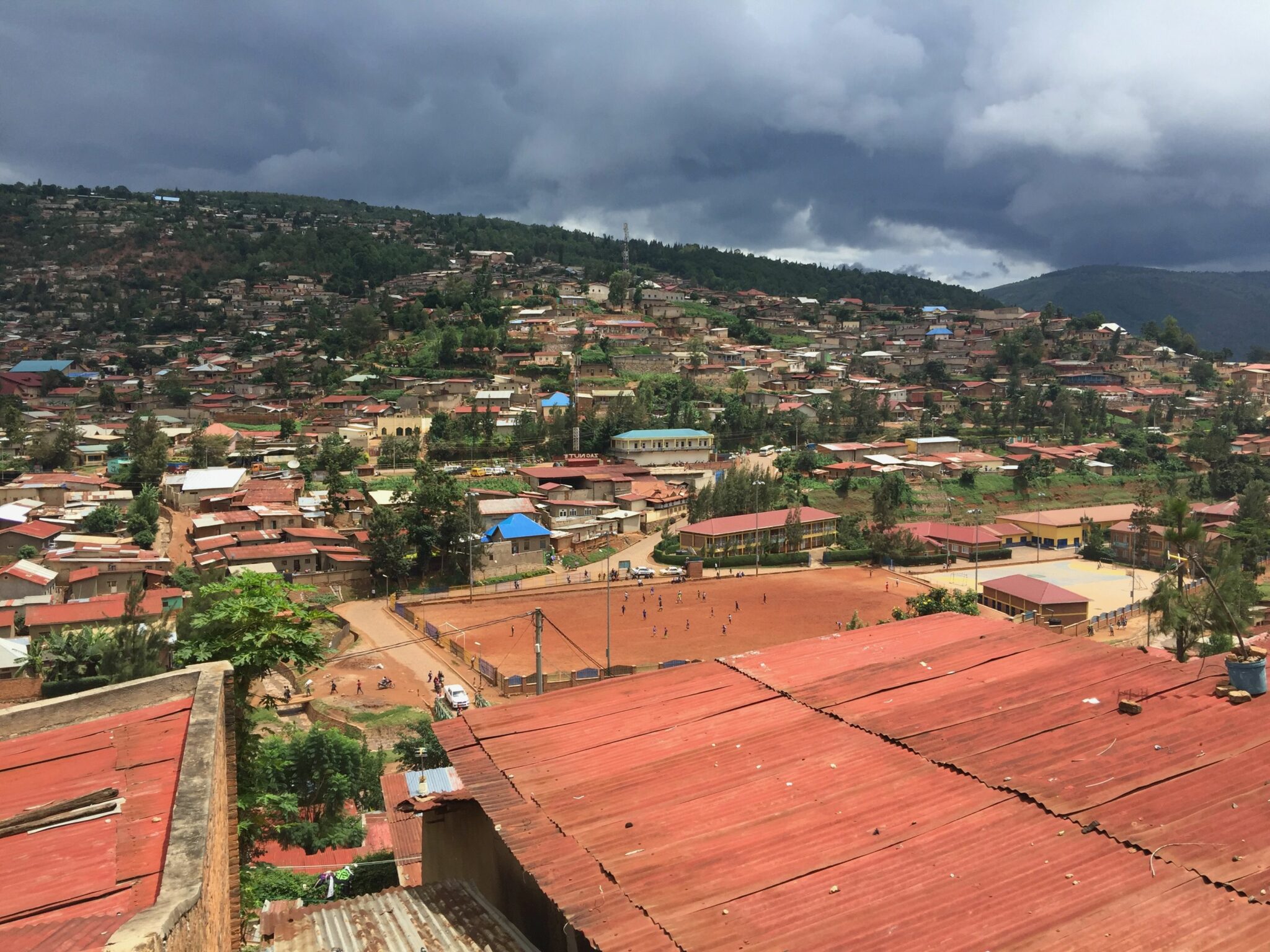
In addition, the housing style in Chad is characterised by the cohabitation of several households in a concession where they share the courtyard, latrines, water and electricity. In addition, the housing offer proposed by the Government was to materialise through the social housing construction projects launched by the President of the Republic in Gassi in 2015 and Toukra in 2016, which have not yet been implemented. In addition, the Government of Chad has budgeted CFA6 613 million (US$10.8 million) for the promotion and construction of social housing
throughout the country.26
The legal framework governing land transactions in Chad is not conducive to the establishment of a formal market for serviced plots, particularly in rural areas. Indeed, the formal (or modern) regime coexists with customary and Islamic law. Thus, the ownership of land can be attested both by its registration (land title) and by its development (customary law). Also, the state can appropriate undeveloped and unregistered land, with a view to allocating it to individuals for exploitation. The coexistence of these three types of frameworks makes it difficult to harmonise and formalise the activities of this sector. In addition, obtaining land titles (TF) and other state deeds (plans, decrees and property certificates) as well as their registration is still dependent on administrative delays (more than 29 days for registration alone), which discourages any legal process.27
Indeed, the absence of a formal and organised residential resale market is notably apparent in the Chadian real estate landscape. We rather observe the acquisition of urban plots by inheritance and/or by direct purchase because official attributions are rare. Nevertheless, a land market for purchase and rental is emerging in both urban and rural areas, although it remains mainly driven by land grabs by the wealthiest (political, military and economic elite). Thus, the banks of the Chari and Logone rivers are dotted with large fenced or private estates.28
In addition, property taxation is very underdeveloped due to the low rate of land title holding, while the level of revenue from property taxes, if paid, could be increased. Since 1 January 2020, tax provisions introduced by the Finance Law have facilitated and secured access to land. This law reduces the costs of land transactions and authorises the issuance of land titles for bare plots. The boundary tax, which varied from CFA50 000 to CFA1 000 000 (US$82 to US$1 639) depending on the size of the plots, has been abolished for urban land. For rural land, a single rate of CFA100 000 (US$164) per hectare has been set.29 In addition, for individuals who wish to buy or sell a property, the use of a real estate agent, although expensive, is preferred due to their experience in the local market and good knowledge of local habits and customs.
Thus, the Chadian real estate market is not only underdeveloped, but the infrastructure and regulatory frameworks are inadequate, even if the Government’s recent efforts have stimulated the sector
There are land registers in Chad maintained by the Land Registry and the Bureau of Deeds or at local government offices in different regions of the country that contain important information about properties, including locations, size, condition, and property history. In addition, these records are accessible to the public, although some information may be restricted for security reasons.30 Also, there are taxes associated with owning real estate in the country such as property tax, land registration fees, and capital gains tax when selling the property.31 In addition, foreigners can buy property in Chad, despite the fact that the process remains complex and requires extensive legal advice.32 However, they must necessarily obtain the authorisation of the Ministry of Territorial Administration before buying a plot of land. In the case of renting, a foreigner can rent a property without any restrictions but must present the landlord with a copy of their passport, visa and employment contract, as well as proof of income and a reference.33
At the legislative level, state and land legislation is governed by six laws dating from 1967 and their implementing decrees.34 This law takes up the regime of state owned property through the concept of National Domain, which covers administrative property, distinguishing between public and private domains. The public domain is divided into natural and artificial goods. The natural public domain includes aquatic areas (rivers, lakes, ponds, springs, groundwater), non-renewable natural resources (minerals and mines), submerged land and river landings and classified forests.35
The private domain excludes the parts of the public domain expressly mentioned and the areas already the subject of a property whose holder is known and existing, while the land abandoned by its legitimate owner falls into the private domain of the state. Since 2014, Chad has been trying to review its land regulations to better manage the exploitation of its pastoral resources. Numerous preliminary projects and processes that have been interrupted many times punctuate this journey. Faced with these difficulties, a new attempt was underway in 2023 to create a “Pastoral Law” to regulate nomadism and the transhumance of livestock on Chadian territory. The draft Land and State Code developed and submitted for adoption by the National Assembly in 2014 is, for the most part, an overhaul of laws 23, 24, 25 of 22 July 1967 on land and their respective
implementing decrees.36
Chad is at a crucial moment in its development, where the challenges of poverty, rapid population growth and humanitarian crises require innovative and sustainable responses. In this context, the affordable housing sector represents a major opportunity to catalyse the socio-economic development of the country. One of the promising initiatives is the partnership between the African Solidarity Fund (ASF) and the Land and Real Estate Development Company (SOPROFIM).37 This partnership, formalised in January 2024, aims to improve access to decent housing for the Chadian population, in line with the objectives of the African Union’s Agenda 2063. The FSA, with its experience in supporting social housing programmes in other African countries, brings expertise that could transform the housing landscape in Chad. This partnership is not only an opportunity for the housing sector, but also a lever for the overall economic development of the country.
The promotion of social housing in Chad is closely linked to several socioeconomic benefits. These homes free up a significant portion of family budgets for other essential needs such as nutrition, education, and health care. In addition, the construction of social housing increases the demand for basic infrastructure, thereby contributing to the improvement of public services in communities. The impact of these initiatives goes beyond the housing sector alone, touching on aspects as diverse as employment, education, and social cohesion.
Chad’s socio-economic context, marked by widespread poverty and high vulnerability, makes initiatives even more crucial. The development of affordable housing could play a role in reducing inequalities and improving living conditions. In addition, the active participation of international and regional organisations, such as the FSA, gives the country a unique opportunity to benefit from the expertise and funding needed to achieve its sustainable development goals.
In Chad, there are many constraints on the collection, production and dissemination of data on real estate and housing. One example is the reluctance of real estate developers, banking institutions and public and private administrations to share data. On the other hand, the lack of adequate tools and equipment makes it difficult for the National Institute of Statistics, Economic and Demographic Studies (INSEED) to collect, process, disseminate and archive data. For example, the gaps that accompany the production and dissemination of key statistics limit the government’s ability to measure real estate sector indicators and respond to changes in economic conditions. The Five-Year National Development Plan (2016-2020) emphasises the importance of having accurate and high-quality statistics to monitor and evaluate the national development strategy. This project therefore presents a series of activities aimed at strengthening the national statistical system in Chad, through a series of new household surveys and support for macroeconomic statistics, particularly in the monitoring of the economic situation.
INSEED:
https://www.inseed.td
Ministry of Land Affairs, Housing Development and Urban Planning:
https://urbanisme.gouv.td/
- Ravoavahy, R. (2024). N’Djamena: a complete view of the cost of living in the Chadian capital. 21 February 2024.The echo of the South. https://tinyurl.com/mrxfhant (Accessed 14 August 2024).
- World Bank. (2023). Chad overview.
- See footnote 2.
- TchanaTchana, F., Savadogo,A., Noumedem Temgoua, C. (2023). Promoting Shared Prosperity in Chad: Pathways and Prerequisites in a Landlocked Country Plagued by Fragility and Conflict. Washington, D.C.: World Bank Group. Pg. 22.
- See footnote 4. Pg. 23.
- See footnote 4. Pg. XII.
- Land portal. (2023). Chad – Context and Land Governance. https://landportal.org/fr/book/narratives/2023/tchad (Accessed 15 August 2023).
- World Bank. (2024).The World Bank in Chad.
- See footnote 2.
- See footnote 2.
- See footnote 8.
- See footnote 8.
- Olive,A. (2024). Pregnancy-children Maternal mortality: Chad is mobilizing. 2 April 2024. Health in Africa. https://santeenafrique.com/sante-maternelle-neonatale-et-infantile-defi-tchad/ (Accessed 27 September
2024). - Chad MFW4A. (2023). MFW4A – Making Finance Work for Africa https://www.mfw4a.org/country/chad
(Accessed 14 August 2023). - See footnote 14.
- See footnote 14.
- World Bank. (2023). Creating markets in Chad. Pg. 7.
- See footnote 14.
- Soprofim. (2023). http://soprofim.com/projet.html (Accessed 22 July 2023).
- African Development Bank. (2024). Country Report 2024 – Chad – Driving Chad’s transformation through the reform of the global financial architecture. 31 July 2024. https://tinyurl.com/26pya393 (Accessed
28 September 2024). Pg. 12. - See footnote 14.
- Bank of Central African States. (2023).Annual Report 2023. https://tinyurl.com/4wnvt8xw (Accessed 14 August 2024).
- IOM. (2022). Chad: Country Fact Sheet 2022. Report. August 2022.
https://files.returningfromgermany.de/files/CFS_2022_Chad_FR.pdf (Accessed 15 September 2024). Pg. 5. - SOS Children’s Villages. General information about Chad. https://www.sos-childrensvillages.org/where-wehelp/africa/chad (Accessed 16 August 2023).
- DonneesMondiales.com. (2023). Population growth in Chad.
https://www.donneesmondiales.com/afrique/tchad/croissance-population.php (Accessed 16 August 2023). - Ben Said, E. (2017). Chad: N’Djamena wants to release US$11 million for the construction of social housing. 3 October 2017.Anadolu Ajansi.
- World Bank. (2023).World Development Index. https://www.doingbusiness.org/en/custom-query (Accessed
14 August 2023). - See footnote 7.
- Land portal. (2023). Chad: The State facilitates access to land. https://tinyurl.com/57r8y4fy
- Realestatehum.com. (2023). Chad’s Real Estate Cases: An Overview.
https://www.realestatehum.com/chad/real-estate-records (Accessed 14 September 2023). - Realestatehum.com. (2023). Real Estate Listings in Chad: Explore Now!
https://www.realestatehum.com/chad/real-estate-listing (Accessed 14 September 2023). - Realestatehum.com. (2023). Real Estate Developments in Chad: Updates.
https://www.realestatehum.com/chad/real-estate-news (Accessed 14 September 2023). - Realestatehum.com. (2023). Properties For Rent in Chad Available Now!.
https://www.realestatehum.com/chad/real-estate-for-rent (Accessed 14 September 2023). - Law-Africa. (1967). Chad: Land Ownership and Customary Rights. Law No. 24 of 22 July 1967. http://www.droit-afrique.com/upload/doc/tchad/Tchad-Loi-1967-24-propriete-fonciere.pdf Pg. 1.
- Droit-Afrique.com. (1967). Chad: Law on the Status of State Property. Law 67-23 of 22 July 1967.
https://urbanisme.gouv.td/wp-content/uploads/2021/07/LOI-23-Biens-domaniaux.pdf (Accessed 15 September 2023). Pg. 1. - Barrière, O., Mahamat Saleh, O., Togueyan, I. (2018). Methodological support mission for the security of pastoral land tenure in connection with agro-pastoral land development activities in Moyen Chari and Mandoul (Chad). Mission from 23/10 to 12/11 2018. Interim Report (23 November 2018). Pg. 9.
- Tchadinfos. (2024). Partnership between the African Solidarity Fund and the Land Promotion Company for the Development of Housing in Chad. 11 Jan 2024. https://tchadinfos.com/partenariat-entre-le-fonds-desolidarite-africain-et-la-societe-de-promotion-fonciere-pour-le-developpement-de-lhabitat-au-tchad/
(Accessed 14 August 2024). - United Nations Office for the Coordination of Humanitarian Affairs. (2020).
https://projects.hpc.tools/project/162296/view (Accessed 14 August 2024)
image submissions
CAHF welcomes image submissions that are relevant to affordable housing in Africa. Send your photos to [email protected] for possible inclusion on our website.
media gallery
View image gallery of photos for other countries



related reports
related projects
Sorry, we couldn't find any posts. Please try a different search.