Countries
South Africa
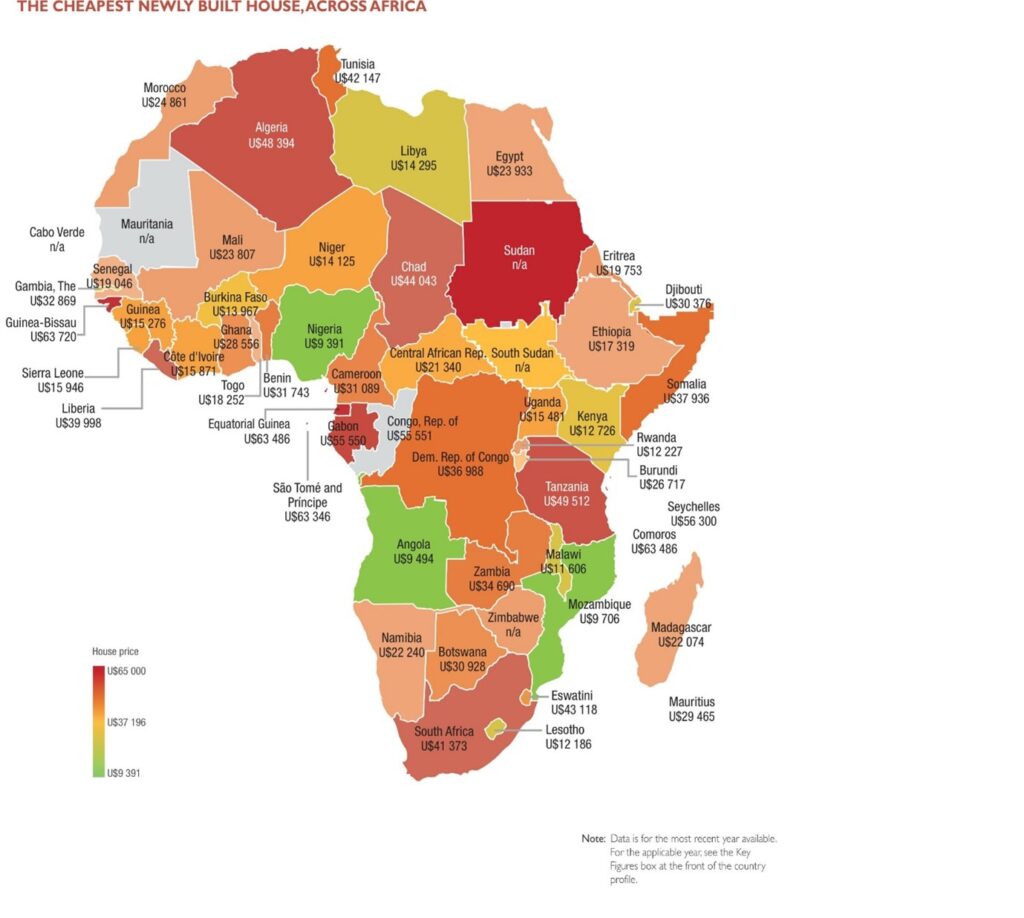
A multi-party democracy at the southern tip of Africa, South Africa had the second largest GDP (current US$) on the continent in 2023, after Egypt, yet is currently the most unequal country in the world, as measured by the Gini index, at 63.0. ?1 South Africa’s GDP per capita in 2023 was approximately R113 054 (US$6 253), below several other countries on the continent and notably below its much smaller neighbour, Botswana.2
According to the recent 2022 Census, the country has a population of 62 million people living in 17.8 million households. Average household size has continued to decrease, with the national average being 3.5 persons per household in 2022. 3 The number of households living in formal dwellings has increased from 65.1% in 1996 to 88.5% in 2022, while the percentage of households living in informal dwellings has halved, from 16.2% in 1996 to 8.1% in 2022. Nationally, nearly a third (30%) of households live in government-subsidised housing.
The percentage of the population with access to piped water either inside their dwelling or in their yard surged to 82.4% in 2022, compared to 32.3% in 2001. Households with access to a flush toilet also increased to 70.8% in 2022. Access to electricity as the main source of energy for lighting has risen from 58.1% in 1996 to almost 95% in 2022. Two-thirds of households have weekly refuse removal. 4
Urbanisation remains high, with an increasing recognition that this no longer applies only to large metropolitan municipalities: the rate of urbanisation in intermediate cities and small towns has surpassed that of major cities. In 2023, 69% of the population lived in urban areas.5
A significant development in the human settlements environment in South Africa is the tabling of the draft White Paper on Human Settlements for public comment, in late 2023. According to the National Department of Human Settlements (DHS), following approval of the White Paper, the Housing Act of 1997 will be repealed and replaced by new human settlements legislation.
The draft White Paper reports that by 2022, the human settlements sector had delivered over 3.4 million stand-alone houses and units in multi-storey buildings since 1994. Provinces and municipalities have further provided almost 1.3 million serviced sites. While the DHS acknowledges housing backlogs increasing, it does not provide an estimate of these.
In the 2019-2024 term of office, the DHS built 245 587 houses; in the 2023/24 financial year, it built 29 4246 The department’s total budget is R33 billion (US$1.8 billion) in 2024/25, a decrease when compared to the previous financial year. Given the country’s current fiscal constraints and low economic growth, further budget cuts are expected, totalling R14 billion (US$0.77 billion) over the next three years. The DHS is targeting the delivery of almost 21 000 top structures and 35 000 serviced sites in the 2024/25 financial year.7
The South African economy contracted in Q1 2024 by 0.1% and construction fell by 3.1%. The downward trend in the construction sector (fourth consecutive decrease), is attributed to weaker economic activity related to residential buildings and construction works.8 Annual national residential property price inflation was 2.6% in February 2024, up from 2.5% in January 2024.9The year-on-year consumer price inflation rate was recorded at 4.6% in July 2024, down from 5.1% in June 2024. The prime lending rate has remained unchanged since 2023, at 11.75%.10


The mortgage market in South Africa saw an 11.38% annual increase in mortgage loans as of March 2024, despite a 2.9% rise in non-performing loans from Q4 2023 to Q1 2024.
Grants are the second most important source of income for households after salaries. 23% of households rely on grants as their main source of income.
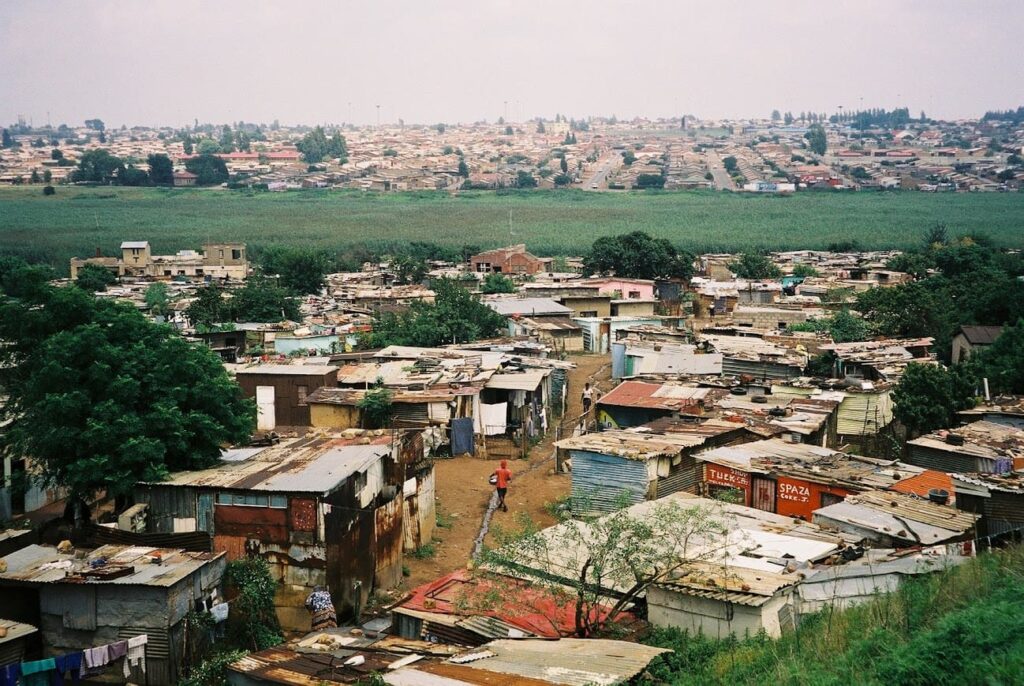
Despite a national housing subsidy programme, South Africa has almost 4300 informal settlements. By mid-2023, 1269 informal settlements were at various stages of upgrading.
South Africa Library
Paarl, Wellington, Mbekweni area housing market study
- Date:
- Topic: Affordability, finance, Public-Private Partnership, supply
- Document Type: Reports
- Projects Citymark: Analysis of residential property markets in South Africa’s eight metros
Developed in 2021, the draft Western Cape Inclusionary Housing Policy Framework provides a guide for municipalities to develop local policies which harness inclusionary housing as
Stellenbosch town housing market study
- Date:
- Topic: Affordability, finance, Public-Private Partnership, supply
- Document Type: Reports
- Projects Citymark: Analysis of residential property markets in South Africa’s eight metros
Developed in 2021, the draft Western Cape Inclusionary Housing Policy Framework provides a guide for municipalities to develop local policies which harness inclusionary housing as
Evaluation of social housing cooperatives and instalment sale projects
- Date:
- Topic: cooperative, Instalment Sale, Social housing
- Document Type: Reports
- Projects Rental Housing in Africa
The evaluation of social housing cooperatives and instalment sales projects was commissioned by the Social Housing Regulatory Authority (SHRA). Co-operative housing and instalment sale (rent
Review of rent to buy with a particular focus on the Institutional Housing Subsidy Programme
- Date:
- Topic: Rent to own, Rental
- Document Type: Reports
There is a broad consensus in government that new solutions must be found to tackle the growing housing crisis in the country. In this context,
Transaction Support Centre Learning: Deceased Estates
- Date:
- Topic: Property Markets, Title deeds
- Document Type: Past Webinars
- Projects Tenure Support Centre
The first TSC Learning Series webinar focused on deceased estates in primary transfer cases. In case you missed it, the recording and presentation from this
Rise Africa 2022 Festival: ‘Africa now! An urgent case for investment towards more sustainable cities and towns
- Date:
- Topic: Data, finance, Investment
- Document Type: Past Webinars, Presentations
- Projects African Housing Investment Landscapes
Convened annually around Africa Day, the Rise Africa 2022 Festival was held from 23 – 25 May. Rise Africa brings together thinkers, doers and enablers
Africa Housing Innovation Awards : Transaction Support Centre Pitch
- Date:
- Topic: Property Markets, Title deeds
- Document Type: Past Webinars, Presentations
- Projects Tenure Support Centre
Nelson Mandela Bay Metro Housing Market Report – 2021
- Date:
- Topic: Mortgage, Property Markets, public funding
- Document Type: Reports
- Projects Citymark: Analysis of residential property markets in South Africa’s eight metros
As part of our series of reports on the eight metros in South Africa, this report on the residential property market in Nelson Mandela Metro, provides
related projects
related news
related discussions

CAHF 10th Anniversary: A Decade of Impact, A Future for Housing
Inclusionary housing: A novel approach to building integrated cities

Spotlight on AUHF’s Inaugural Affordable Housing Award Winners
Innovation in affordable housing: Making the pieces fit together
Environmental Resilience, Social Justice, and Collaborative Governance In Real Estate Development